Intention for Umrah
لَبَّيْكَ اللَّهُمَّ عُمْرَةً
Transliteration: Labbayka Allahumma Umrah
Meaning: Here I am, O Allah, for Umrah.
The pilgrim clearly declares the rite at the start of the Talbiyah. By doing so, he becomes Muhrim.
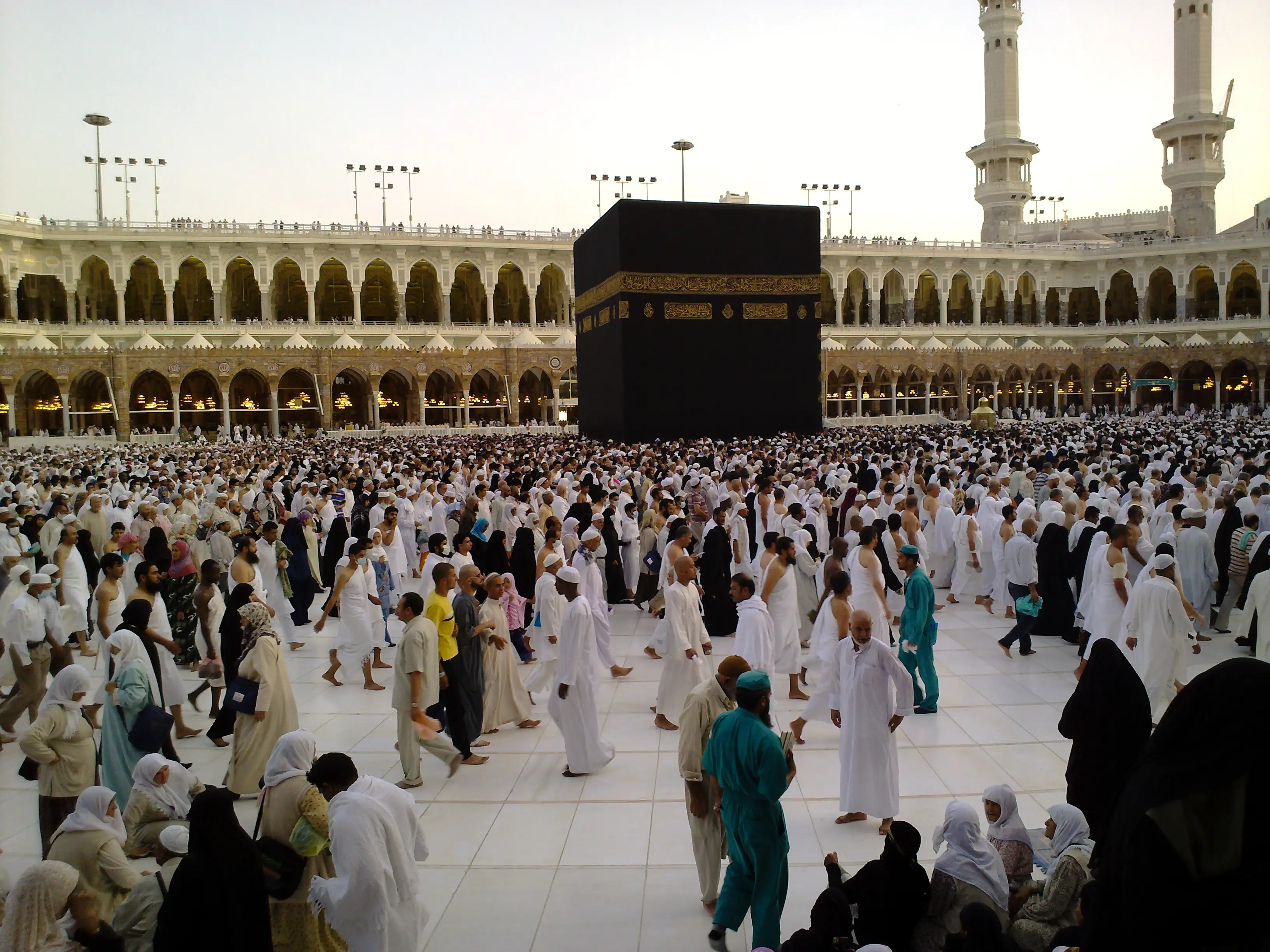
The supplications and dhikr given in the Ministry of Hajj and Umrah guides, in the order you say them: from the Umrah intention to the last lap of Sa’i. Each one in Arabic, with transliteration and meaning. Copy any of them, or save the whole page as a PDF.
لَبَّيْكَ اللَّهُمَّ عُمْرَةً
Transliteration: Labbayka Allahumma Umrah
Meaning: Here I am, O Allah, for Umrah.
The pilgrim clearly declares the rite at the start of the Talbiyah. By doing so, he becomes Muhrim.
فَإِنْ حَبَسَنِي حَابِسٌ فَمَحِلِّي حَيْثُ حَبَسْتَنِي
Transliteration: Fa in habasani habis fa mahilli haythu habastani
Meaning: If I am prevented by any obstacle, then my place of release is wherever I am prevented.
For a pilgrim who fears he may not complete the rite because of illness or circumstances beyond his control. It is said after specifying the rite; if something then prevents him, he may exit Ihram without any penalty.
لَبَّيْكَ اللَّهُمَّ لَبَّيْكَ، لَبَّيْكَ لَا شَرِيكَ لَكَ لَبَّيْكَ، إِنَّ الْحَمْدَ وَالنِّعْمَةَ لَكَ وَالْمُلْكَ، لَا شَرِيكَ لَكَ
Transliteration: Labbayka Allahumma labbayk, labbayka la sharika laka labbayk, inna al-hamda wa an-ni‘mata laka wa al-mulk, la sharika lak
Meaning: We have answered Your call, O Allah, to perform Hajj and Umrah, acknowledging Your blessings and affirming Your complete sovereignty.
Men raise their voices in the Talbiyah, while women recite it quietly. It begins from the moment of Ihram and, for Umrah, ends upon seeing the Kaaba or starting Tawaf.
The ministry guide sets no special dua for each circuit. Pilgrims are encouraged to pray from their hearts and present their personal needs to Allah. Two phrases are given:
اللهُ أَكْبَرُ
Transliteration: Allahu Akbar
Meaning: God is the Greatest.
At the start of each circuit, raising the right hand when aligned with the Black Stone. It does not need to be exact: when approximately aligned, the takbir is said. At the end of each circuit, gesture toward the Black Stone with the hands and say it again.
رَبَّنَا آتِنَا فِي الدُّنْيَا حَسَنَةً، وَفِي الْآخِرَةِ حَسَنَةً، وَقِنَا عَذَابَ النَّارِ
Transliteration: Rabbana atina fid-dunya hasanatan wa fil-akhirati hasanatan wa qina ‘adhaban-nar
Meaning: Our Lord, grant us good in this world and good in the Hereafter, and protect us from the torment of the Fire.
Recommended at the end of each circuit.
﴿وَاتَّخِذُوا مِن مَّقَامِ إِبْرَاهِيمَ مُصَلًّى﴾
Meaning: And take the Station of Ibrahim as a place of prayer.
Recited behind the Station of Ibrahim or in line with it, before the opening takbir. Then two rak‘ahs: Surah Al-Kafirun after Al-Fatihah in the first, Surah Al-Ikhlas after Al-Fatihah in the second.
«مَاءُ زَمْزَمَ لِمَا شُرِبَ لَهُ»
Meaning: Zamzam water is for whatever it is drunk for.
It is Sunnah to drink Zamzam water after Tawaf with a specific intention, in line with this saying of the Prophet ﷺ.
The ministry guide sets no special dua for each lap of Sa’i. It gives a verse to recite and a dhikr said on Safa and Marwah three times, with your own supplications in between:
﴿إِنَّ الصَّفَا وَالْمَرْوَةَ مِن شَعَائِرِ اللَّهِ ۖ فَمَنْ حَجَّ الْبَيْتَ أَوِ اعْتَمَرَ فَلَا جُنَاحَ عَلَيْهِ أَن يَطَّوَّفَ بِهِمَا ۚ وَمَن تَطَوَّعَ خَيْرًا فَإِنَّ اللَّهَ شَاكِرٌ عَلِيمٌ﴾
Meaning: Indeed, Safa and Marwah are among the symbols of Allah. So whoever makes Hajj to the House or performs Umrah, there is no blame upon him for walking between them. And whoever volunteers good, then indeed, Allah is appreciative and knowing.
(Al-Baqarah: 158)
اللهُ أَكْبَرُ، اللهُ أَكْبَرُ، اللهُ أَكْبَرُ، لَا إِلَهَ إِلَّا اللهُ وَحْدَهُ لَا شَرِيكَ لَهُ، لَهُ الْمُلْكُ وَلَهُ الْحَمْدُ، وَهُوَ عَلَى كُلِّ شَيْءٍ قَدِيرٌ، لَا إِلَهَ إِلَّا اللهُ وَحْدَهُ، أَنْجَزَ وَعْدَهُ، وَنَصَرَ عَبْدَهُ، وَهَزَمَ الْأَحْزَابَ وَحْدَهُ
Transliteration: Allahu Akbar, Allahu Akbar, Allahu Akbar. La ilaha illallah wahdahu la sharika lah, lahul-mulku wa lahul-hamd, wa huwa ‘ala kulli shay’in qadir. La ilaha illallah wahdah, anjaza wa‘dah, wa nasara ‘abdah, wa hazamal-ahzaba wahdah.
Meaning: Allah is the Greatest, Allah is the Greatest, Allah is the Greatest. There is no deity but Allah alone, without partner. To Him belongs the dominion, to Him belongs all praise, and He has power over all things. There is no deity but Allah alone. He fulfilled His promise, aided His servant, and defeated the confederates alone.
Face the qiblah and say it, then make any personal supplications you wish. Repeat it and supplicate again, three times in all, before continuing your Sa’i. Stand where you do not block others or cause congestion.
The Ministry of Hajj and Umrah guide sets no special dua for each circuit. Pilgrims pray from their hearts for their own needs, say “Allahu Akbar” when aligned with the Black Stone, and between the Yemeni Corner and the Black Stone say: “Rabbana atina fid-dunya hasanatan wa fil-akhirati hasanatan wa qina ‘adhaban-nar” (Our Lord, grant us good in this world and good in the Hereafter, and protect us from the torment of the Fire).
At the start of the Talbiyah the pilgrim declares the rite: “Labbayka Allahumma Umrah” (Here I am, O Allah, for Umrah), then recites the Talbiyah: “Labbayka Allahumma labbayk, labbayka la sharika laka labbayk, inna al-hamda wa an-ni‘mata laka wa al-mulk, la sharika lak.”
At the beginning of Safa or Marwah, recite Al-Baqarah 158: “Indeed, Safa and Marwah are among the symbols of Allah…”. At the top, face the qiblah and say: “Allahu Akbar (three times). La ilaha illallah wahdahu la sharika lah…”, then make your own supplications; repeat this three times before continuing your Sa’i.
The Talbiyah begins from the moment of Ihram and, for Umrah, ends upon seeing the Kaaba or starting Tawaf.
According to the ministry guide, men raise their voices in the Talbiyah, while women recite it quietly.
To see the rites drawn step by step: How to perform Umrah.
We quote the supplications as given in the Ministry of Hajj and Umrah guides and do not issue rulings. For questions of fiqh, ask a qualified scholar.