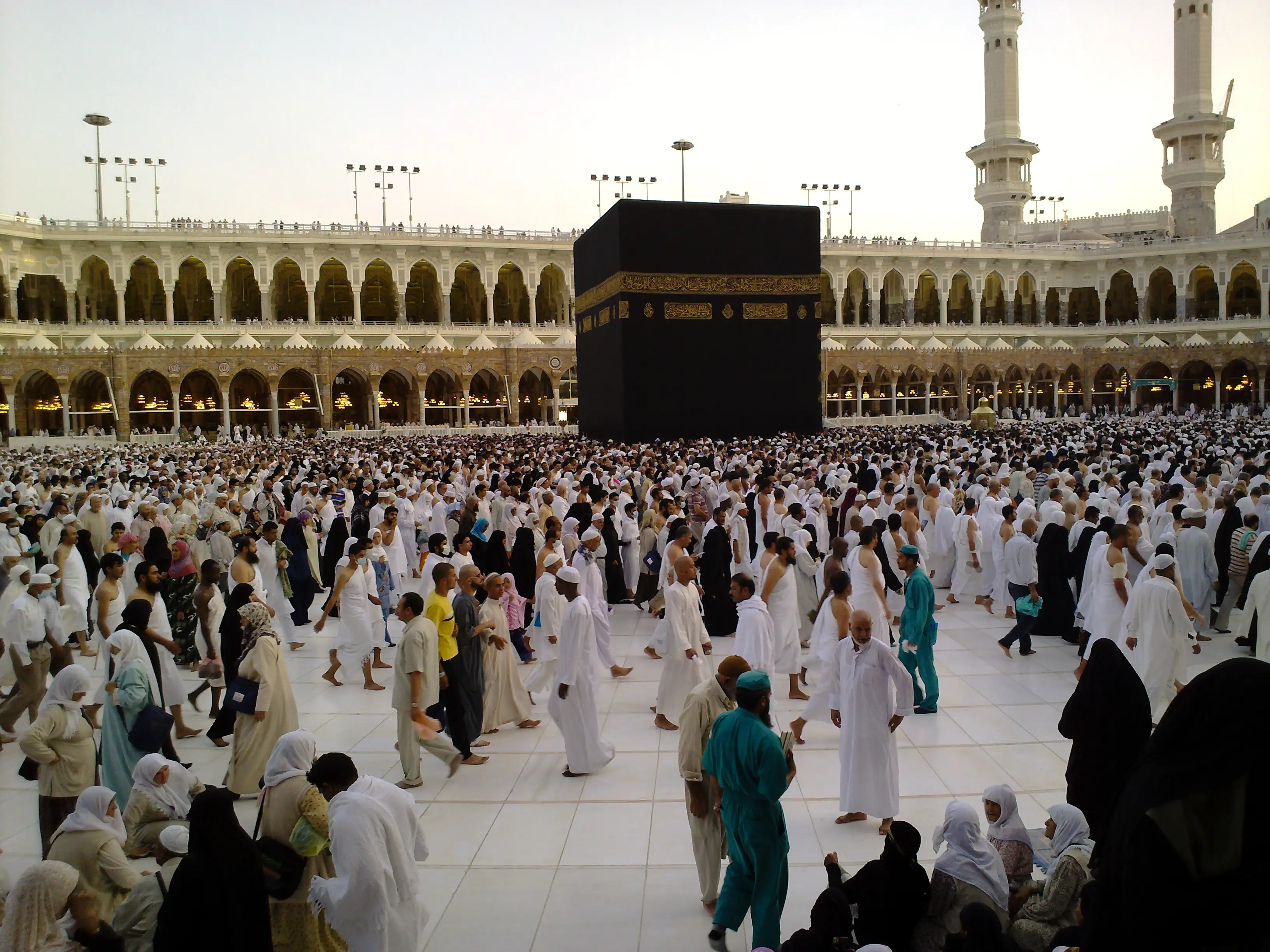
Ihram for Umrah
What men and women wear in ihram, how to enter it, and what becomes forbidden, from the ministry’s Ihram Awareness Guide.
Ihram clothes for men
- An izar wrapped around the lower body and a rida covering the upper body.
- Clips or a belt may be used to hold the izar and keep belongings safe.
- White is recommended.
Ihram clothes for women
A woman may enter ihram in any clothing she chooses, as long as it is:
- loose-fitting, covering appropriately, and does not restrict movement;
- not ornamental or designed for adornment.
How to enter ihram
- Before ihram it is Sunnah to perform ghusl and apply fragrance to the body, and to enter ihram after an obligatory or voluntary prayer.
- Make the intention and begin the Talbiyah, declaring the rite at its start: “Labbayka Allahumma Umrah” (Here I am, O Allah, for Umrah). With this you are in ihram.
- Enter ihram at the miqat or a point parallel to it; flights to Jeddah usually announce when the plane is aligned with a miqat. Someone already in Makkah enters ihram for Umrah from the nearest place outside the Haram, such as Masjid Aisha.
The Talbiyah
لَبَّيْكَ اللَّهُمَّ لَبَّيْكَ، لَبَّيْكَ لَا شَرِيكَ لَكَ لَبَّيْكَ، إِنَّ الْحَمْدَ وَالنِّعْمَةَ لَكَ وَالْمُلْكَ، لَا شَرِيكَ لَكَ
Labbayka Allahumma labbayk, labbayka la sharika laka labbayk, inna al-hamda wa an-ni‘mata laka wa al-mulk, la sharika lak.
We have answered Your call, O Allah, to perform Hajj and Umrah, acknowledging Your blessings and affirming Your complete sovereignty.
Men raise their voices, women recite it quietly. For Umrah it ends upon seeing the Kaaba or starting Tawaf. All Umrah duas, in order.
What is forbidden in ihram
For everyone
- Sexual intercourse
- Entering into a marriage contract
- Hunting
- Shaving the head or cutting nails
- Wearing perfume
For men
- Covering the head
- Wearing tailored or sewn garments
For women
- Wearing the niqab
- Wearing gloves
Not forbidden
- Bathing
- Bandaging wounds
- Wearing sandals
- A woman covering her face in the presence of non-mahram men
Where to enter ihram
The five mawaqit and their distance from Makkah, per the guide: Dhul Hulayfah (Abyar Ali) about 420 km, Al-Juhfah about 187 km, Yalamlam about 115 km, Qarn al-Manazil about 94 km, Dhat Irq about 92 km. Which miqat your flight passes, and when.
Preventing chafing
Chafing in body folds is common, especially for people who are overweight or diabetic. Apply protective cream before walking, keep body folds aired and stay clean. If it happens, wash the area well and then apply a medicated cream.
Frequently asked questions
What do men wear for ihram?
Two pieces: an izar around the lower body and a rida over the upper body, preferably white. A belt or clips may be used to hold the izar.
What do women wear for ihram?
Any clothing that is loose, covers appropriately, does not restrict movement and is not for adornment. Women do not wear the niqab or gloves in ihram.
What do you say when entering ihram for Umrah?
“Labbayka Allahumma Umrah” at the start of the Talbiyah, then the Talbiyah: “Labbayka Allahumma labbayk, labbayka la sharika laka labbayk, inna al-hamda wa an-ni‘mata laka wa al-mulk, la sharika lak.”
Can you shower in ihram?
Yes. Bathing is listed among the things that are not forbidden in ihram. Perfume is forbidden.
What is ihram?
Ihram is the state a pilgrim enters for Umrah: you make the intention and begin the Talbiyah, declaring “Labbayka Allahumma Umrah”, at the miqat or a point parallel to it, and with this you are in ihram. Men wear an izar and a rida, and some things become forbidden, such as perfume and cutting hair or nails.
How do you wear ihram?
Men wrap an izar around the lower body and cover the upper body with a rida; clips or a belt may hold the izar, and white is recommended. Before ihram it is Sunnah to perform ghusl and apply fragrance to the body; then make the intention and begin the Talbiyah at the miqat.
Do you have to do ghusl before ihram?
The ministry’s Ihram guide lists ghusl before ihram as Sunnah, together with applying fragrance to the body and entering ihram after an obligatory or voluntary prayer.
We quote the ministry guide and do not issue rulings. For questions of fiqh, ask a qualified scholar.